Blockchain Technology Transforming Healthcare
📖 5 min read
🔥 Quick Link: Check Best Seller Prices
View "Blockchain Technology Transforming Healthcare" on Amazon →The healthcare industry is undergoing a significant transformation, driven by the need for greater efficiency, security, and transparency in managing sensitive patient data. Blockchain technology, initially known for its role in cryptocurrencies, has emerged as a powerful tool with the potential to revolutionize various aspects of healthcare, from data storage and sharing to supply chain management and clinical research. By leveraging the decentralized and immutable nature of blockchain, healthcare providers can address critical challenges related to data breaches, interoperability, and the rising costs of pharmaceuticals. This technology offers a pathway to a more patient-centric and secure healthcare ecosystem, where individuals have greater control over their own medical information and can benefit from streamlined processes and reduced administrative burdens. The integration of blockchain into healthcare is not just a technological advancement, but a fundamental shift towards a more efficient and trustworthy system.
1. Enhancing Data Security and Interoperability
One of the most significant applications of blockchain in healthcare is its ability to enhance data security and interoperability. Traditional healthcare systems often rely on centralized databases that are vulnerable to cyberattacks and data breaches. Blockchain, on the other hand, uses a distributed ledger system, where data is stored across multiple nodes, making it significantly more difficult for hackers to compromise the entire system. Each transaction is recorded as a “block” and linked to the previous block, creating a secure and transparent chain of information.
This distributed ledger technology promotes interoperability by providing a standardized platform for sharing patient data across different healthcare providers and institutions. Currently, healthcare data is often siloed, making it challenging for doctors and specialists to access a complete patient history. Blockchain can facilitate secure and seamless data sharing, ensuring that healthcare professionals have access to the information they need to make informed decisions. For example, a patient's medical records, including lab results, prescriptions, and treatment plans, can be stored on a blockchain, allowing authorized providers to access this information regardless of their location or affiliation.
The practical implications of improved data security and interoperability are profound. Patients can benefit from more accurate diagnoses, personalized treatment plans, and reduced medical errors. Healthcare providers can streamline their workflows, reduce administrative costs, and improve the overall quality of care. Furthermore, the enhanced security of blockchain can help to protect patient privacy and maintain compliance with data protection regulations such as HIPAA. The ability to securely share data also supports more efficient research, allowing researchers to access larger datasets and accelerate the development of new treatments and therapies.
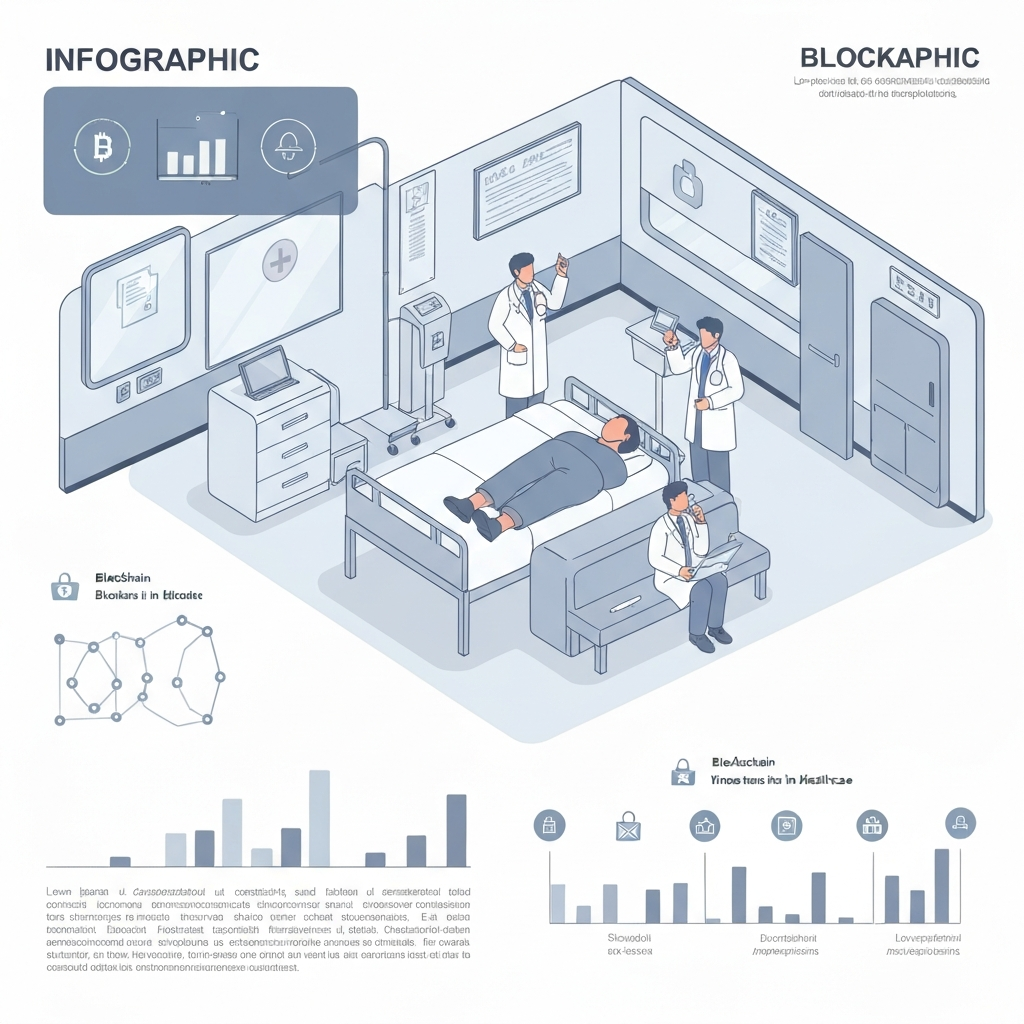
2. Transforming Pharmaceutical Supply Chain Management
The pharmaceutical supply chain is complex and vulnerable to counterfeit drugs, theft, and inefficiencies. Blockchain technology offers a solution to these challenges by providing a transparent and traceable system for tracking pharmaceuticals from the manufacturer to the patient. By recording each step of the supply chain on a blockchain, it becomes possible to verify the authenticity and provenance of drugs, ensuring that patients receive safe and effective medications.
- Enhanced Traceability: Blockchain enables end-to-end traceability of pharmaceuticals, allowing stakeholders to track the movement of drugs at every stage of the supply chain. This includes tracking the origin of raw materials, the manufacturing process, distribution, and dispensing. This level of transparency makes it easier to identify and prevent counterfeit drugs from entering the market.
- Improved Security: The immutable nature of blockchain ensures that data recorded on the ledger cannot be altered or tampered with. This enhances the security of the supply chain by preventing unauthorized modifications to drug information. Each transaction is verified by multiple nodes on the network, making it extremely difficult for counterfeiters to introduce fake drugs into the system.
- Reduced Costs: By streamlining the supply chain and reducing inefficiencies, blockchain can help to lower the costs of pharmaceuticals. The increased transparency and traceability can minimize waste, reduce the risk of theft, and optimize inventory management. This can lead to significant cost savings for both healthcare providers and patients.
3. Empowering Patients with Control Over Their Medical Records
"Giving patients control over their medical records isn't just about privacy; it's about empowering them to actively participate in their own healthcare journey, leading to better health outcomes and a stronger doctor-patient relationship."
One of the most promising aspects of blockchain in healthcare is its potential to empower patients with greater control over their medical records. Traditional healthcare systems often restrict patient access to their own data, making it difficult for individuals to manage their health information and share it with different providers. Blockchain-based solutions can give patients ownership of their medical records, allowing them to securely store and share their data as they see fit.
🛒 Amazon Global Deals
Shop Now: Blockchain Technology Transforming Healthcare* Associate commission may be earned.
With blockchain, patients can grant access to their medical records to specific healthcare providers, researchers, or family members. They can also revoke access at any time, ensuring that their data is only shared with trusted parties. This level of control can help to build trust between patients and healthcare providers, fostering a more collaborative and patient-centered approach to care. Furthermore, patients can use their medical records to participate in clinical trials, contribute to research studies, and receive personalized healthcare recommendations.
The value of patient empowerment extends beyond individual benefits. By giving patients greater control over their medical records, blockchain can promote data quality and accuracy. Patients can review their records for errors and inconsistencies, ensuring that healthcare providers have access to the most up-to-date and accurate information. This can lead to better diagnoses, more effective treatments, and improved patient outcomes. Ultimately, blockchain-enabled patient empowerment has the potential to transform the healthcare system into a more transparent, efficient, and patient-centric ecosystem.
Conclusion
Blockchain technology holds immense promise for transforming the healthcare industry. From enhancing data security and interoperability to streamlining pharmaceutical supply chain management and empowering patients with control over their medical records, blockchain offers a range of solutions to address critical challenges facing the healthcare sector. By leveraging the decentralized, immutable, and transparent nature of blockchain, healthcare providers can create a more efficient, secure, and patient-centric system that benefits all stakeholders.
As blockchain technology continues to evolve and mature, we can expect to see even more innovative applications emerge in healthcare. Future trends may include the use of blockchain for clinical trial management, insurance claims processing, and remote patient monitoring. The integration of blockchain with other emerging technologies, such as artificial intelligence and the Internet of Things, could further enhance its capabilities and unlock new possibilities for improving healthcare outcomes. The journey towards a blockchain-enabled healthcare system is just beginning, but the potential rewards are substantial.
❓ Frequently Asked Questions (FAQ)
What are the main benefits of using blockchain in healthcare?
Blockchain technology offers several key benefits to the healthcare industry. First, it enhances data security by distributing data across multiple nodes, making it more resistant to cyberattacks. Second, it improves interoperability by providing a standardized platform for sharing patient data securely. Third, it streamlines supply chain management by providing transparency and traceability. Finally, it empowers patients by giving them control over their medical records, improving data accuracy and promoting patient-centered care. These benefits collectively contribute to a more efficient, secure, and transparent healthcare ecosystem.
How does blockchain help prevent counterfeit drugs in the pharmaceutical supply chain?
Blockchain provides an immutable and transparent record of each step in the pharmaceutical supply chain, from the manufacturer to the patient. Every transaction, such as the production, distribution, and dispensing of a drug, is recorded on the blockchain and verified by multiple nodes. This makes it extremely difficult for counterfeiters to introduce fake drugs into the system because any discrepancies or unauthorized modifications would be immediately detected. The increased traceability and security offered by blockchain significantly reduce the risk of counterfeit drugs entering the market, ensuring that patients receive safe and effective medications. Imagine a scenario where a batch of medicine is scanned into the blockchain at the manufacturing plant, and every subsequent handoff is also logged, creating a clear chain of custody. Any deviation from this chain raises a red flag.
What are some potential challenges to implementing blockchain in healthcare?
Despite its numerous benefits, implementing blockchain in healthcare also presents several challenges. Scalability can be a concern, as blockchain networks may struggle to handle the large volumes of data generated by healthcare systems. Interoperability with existing healthcare IT infrastructure is another challenge, as integrating blockchain with legacy systems can be complex and costly. Regulatory uncertainty and the need for clear legal frameworks around data privacy and security can also hinder adoption. Finally, user adoption and education are crucial, as healthcare providers and patients need to understand and trust the technology for it to be effectively implemented. Overcoming these challenges requires careful planning, collaboration, and ongoing education.
Tags: #Blockchain #Healthcare #DataSecurity #Pharmaceuticals #Innovation #Tech #DigitalHealth
🛒 Amazon Global Deals
Shop Now: Blockchain Technology Transforming Healthcare* Associate commission may be earned.
⚠️ LEGAL DISCLAIMER
For Informational Purposes Only: All content provided by GGG PICK is for general informational purposes only. This content is not intended to serve as a substitute for official professional advice, technical diagnosis, or legal counsel.
Disclaimer of Warranty: While we strive to maintain the currency and accuracy of information, we do not guarantee the completeness, reliability, or real-time accuracy of the provided data. Any decisions and actions taken based on the information from this website are solely at the user's own risk.
Note: Always consult with a certified professional before making significant business or technical decisions. GGG PICK shall not be held liable for any direct or indirect loss or damage resulting from the use of this website.