Brain Computer Interface The Future of IT and Human Augmentation
📖 5 min read
🔥 Quick Link: Check Best Seller Prices
View "Brain Computer Interface Future IT" on Amazon →The convergence of neuroscience and information technology has birthed a revolutionary field poised to redefine the boundaries of human capability: Brain-Computer Interfaces (BCIs). BCIs, also known as brain-machine interfaces (BMIs), offer a direct communication pathway between the human brain and external devices, circumventing traditional input methods like keyboards and touchscreens. This technology, once relegated to the realm of science fiction, is rapidly transitioning into reality, promising groundbreaking advancements across various sectors, from healthcare and gaming to communication and automation. The implications are profound, suggesting a future where humans can interact with technology in ways previously unimaginable, unlocking new levels of efficiency, control, and accessibility for all. This article will delve into the core concepts, applications, challenges, and ethical considerations surrounding BCIs, painting a comprehensive picture of this transformative technology and its potential impact on the global IT landscape.
1. Understanding Brain-Computer Interfaces
At its core, a BCI system translates neural activity into actionable commands for external devices. This intricate process typically involves several key stages: neural signal acquisition, signal processing, feature extraction, and device control. Electrodes, either implanted directly into the brain (invasive BCIs) or placed on the scalp (non-invasive BCIs), detect electrical signals generated by neurons. These signals are then amplified, filtered, and processed to identify specific patterns corresponding to different intentions or actions.
The choice between invasive and non-invasive BCIs hinges on a trade-off between signal quality and safety. Invasive BCIs, such as those employing microelectrode arrays or electrocorticography (ECoG), offer superior signal resolution and spatial specificity, enabling more precise control. However, they require surgical implantation, carrying inherent risks of infection, tissue damage, and immune response. Non-invasive BCIs, exemplified by electroencephalography (EEG), are safer and more accessible, but they suffer from lower signal quality due to the skull and scalp attenuating brain signals. Ongoing research focuses on developing hybrid approaches and advanced signal processing techniques to improve the performance of non-invasive BCIs.
The potential applications of BCIs are vast and transformative. In healthcare, BCIs offer hope for restoring motor function in paralyzed individuals, enabling them to control prosthetic limbs or exoskeletons with their thoughts. In communication, BCIs can provide a means for locked-in patients to communicate and interact with the world, spelling out words or controlling assistive devices. Beyond healthcare, BCIs are finding applications in gaming, virtual reality, and augmented reality, allowing users to interact with digital environments in more intuitive and immersive ways. The development of intuitive control systems and real-time data feedback is crucial for BCIs to become more integrated into everyday life.
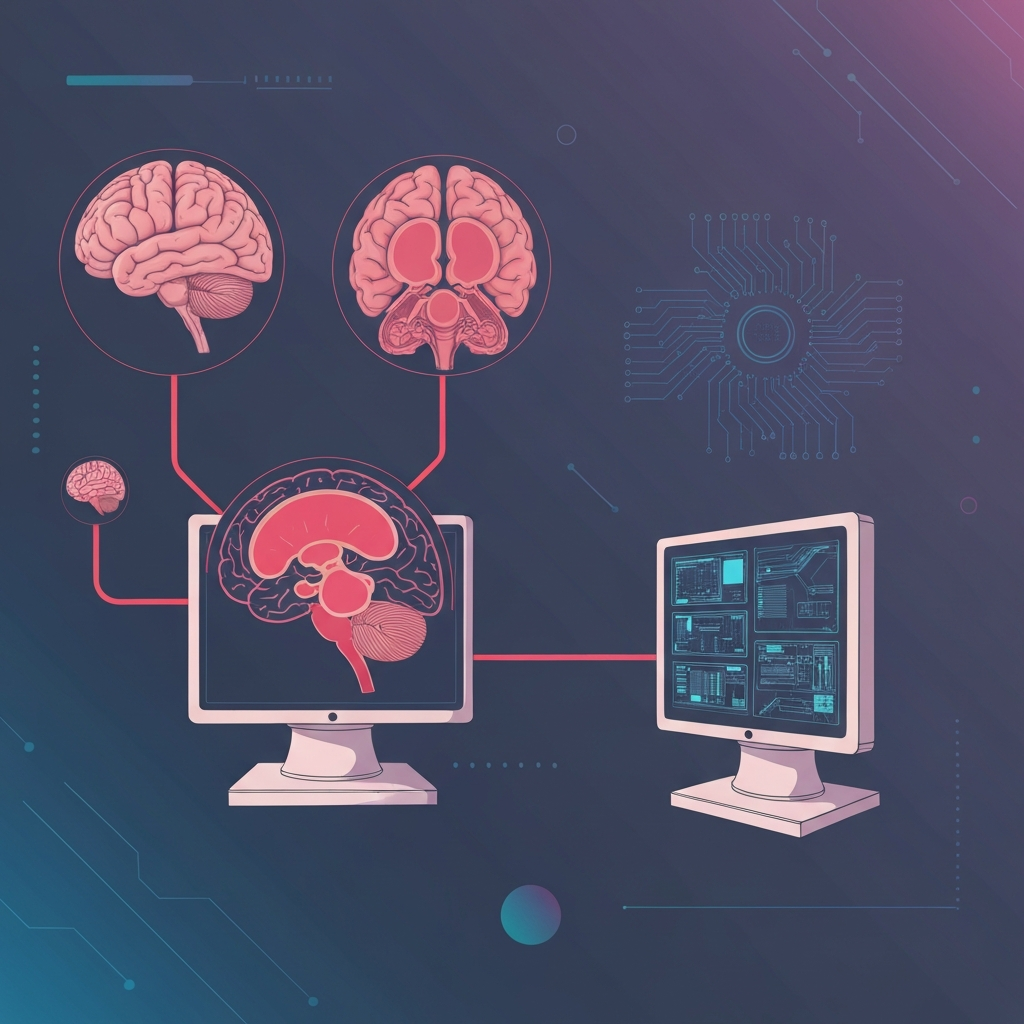
2. Key Applications and Future Trends
The application of BCIs extends far beyond just assistive technology. With continued development, we can anticipate integration into several key areas.
- Healthcare and Rehabilitation: BCIs show immense promise in restoring lost motor functions, assisting individuals with paralysis or neurological disorders. Imagine individuals controlling robotic limbs or exoskeletons through thought, regaining independence and mobility. Furthermore, BCIs are being explored for treating conditions like epilepsy, depression, and chronic pain by modulating neural activity and providing targeted therapy. Researchers are actively working on developing closed-loop BCI systems that can dynamically adjust treatment parameters based on real-time brain activity, optimizing therapeutic outcomes.
- Gaming and Entertainment: BCIs are revolutionizing the gaming industry, offering new levels of immersion and interactivity. Players can control game characters or interact with virtual environments using their thoughts, creating a more engaging and intuitive experience. Furthermore, BCIs can be used to personalize game difficulty based on the player's cognitive state, providing adaptive challenges and enhancing overall enjoyment. The development of consumer-grade BCI headsets is paving the way for widespread adoption of brain-controlled gaming in the future.
- Communication and Accessibility: BCIs can empower individuals with locked-in syndrome or severe communication impairments to express themselves and connect with the world. By translating thoughts into text or speech, BCIs enable these individuals to communicate their needs, desires, and ideas, improving their quality of life and fostering greater social inclusion. Advanced BCI systems are also being developed to control assistive devices, such as wheelchairs or environmental control systems, providing individuals with greater independence and autonomy. The creation of accessible BCI interfaces is essential for ensuring that this technology benefits all members of society.
3. Ethical Considerations and Challenges
As BCI technology advances, it's crucial to address the ethical implications surrounding its use, ensuring responsible innovation and deployment.
The rapid advancement of BCI technology necessitates careful consideration of its ethical implications. Concerns surrounding data privacy, mental autonomy, and equitable access must be addressed to ensure responsible development and deployment. For instance, the potential for unauthorized access to brain data raises significant privacy concerns. Robust security measures and ethical guidelines are needed to protect individuals' cognitive privacy and prevent misuse of brain data.
🛒 Amazon Global Deals
Shop Now: Brain Computer Interface Future IT* Associate commission may be earned.
Maintaining mental autonomy is another crucial ethical consideration. BCIs should not be used to manipulate or control individuals' thoughts or actions without their consent. Safeguards must be in place to prevent coercion or undue influence, ensuring that individuals retain full control over their own minds. Equitable access to BCI technology is also essential to prevent exacerbating existing social inequalities. Efforts should be made to ensure that BCI technology is affordable and accessible to all, regardless of socioeconomic status or geographic location.
Addressing these ethical challenges is crucial for fostering public trust and ensuring the responsible development of BCI technology. By engaging in open dialogue, establishing ethical guidelines, and promoting equitable access, we can harness the transformative potential of BCIs while mitigating potential risks. The long-term viability of BCI technology hinges on proactive engagement with ethical considerations and responsible innovation, paving the way for a future where BCIs benefit all of humanity.
Conclusion
Brain-Computer Interfaces represent a paradigm shift in the way humans interact with technology and the world around them. With applications ranging from restoring lost motor functions to enhancing gaming experiences and enabling communication for locked-in patients, BCIs hold immense potential to improve the quality of life for millions of people. The ongoing research and development efforts in this field are pushing the boundaries of what is possible, paving the way for a future where BCIs are seamlessly integrated into our daily lives.
Looking ahead, we can expect to see further advancements in BCI technology, including the development of more sophisticated algorithms, more comfortable and non-invasive interfaces, and more personalized and adaptive systems. The convergence of BCIs with other emerging technologies, such as artificial intelligence and virtual reality, will unlock even greater possibilities, creating immersive and interactive experiences that blur the lines between the physical and digital worlds. As BCI technology continues to evolve, it is essential to address the ethical considerations and ensure that this technology is used responsibly and equitably, fostering a future where BCIs benefit all of humanity.
❓ Frequently Asked Questions (FAQ)
How do Brain-Computer Interfaces work in simple terms?
Brain-Computer Interfaces (BCIs) work by detecting and interpreting electrical signals produced by your brain. Electrodes, either placed on your scalp or implanted in your brain, pick up these signals. The signals are then processed by a computer algorithm, which translates them into commands that control external devices, like a cursor on a screen, a robotic arm, or even a wheelchair. Essentially, it's like enabling you to control devices with your thoughts.
Are Brain-Computer Interfaces safe, especially the implanted ones?
The safety of Brain-Computer Interfaces, particularly implanted ones, is a significant area of research and development. While non-invasive BCIs like EEG have minimal risks, implanted BCIs carry potential risks such as infection, tissue damage, and immune responses. However, significant advancements in materials science and surgical techniques are continually improving the safety and biocompatibility of implanted devices. Before clinical trials and eventual widespread use, rigorous testing and ethical reviews are conducted to minimize potential risks and ensure patient safety.
How much does a Brain-Computer Interface cost, and will it be affordable in the future?
Currently, Brain-Computer Interfaces are quite expensive, mainly due to the complex research, development, and manufacturing processes involved. The cost can vary significantly depending on the type of BCI, the level of invasiveness, and the specific application. While early BCI systems were primarily research tools, advances in technology, increased competition, and economies of scale are expected to drive down costs in the future. As BCIs become more commonplace, increased affordability will be crucial for widespread adoption and ensuring equitable access to this transformative technology.
Tags: #BrainComputerInterface #BCI #Neurotech #FutureTech #AssistiveTechnology #ITInnovation #TechTrends
🛒 Amazon Global Deals
Shop Now: Brain Computer Interface Future IT* Associate commission may be earned.
⚠️ LEGAL DISCLAIMER
For Informational Purposes Only: All content provided by GGG PICK is for general informational purposes only. This content is not intended to serve as a substitute for official professional advice, technical diagnosis, or legal counsel.
Disclaimer of Warranty: While we strive to maintain the currency and accuracy of information, we do not guarantee the completeness, reliability, or real-time accuracy of the provided data. Any decisions and actions taken based on the information from this website are solely at the user's own risk.
Note: Always consult with a certified professional before making significant business or technical decisions. GGG PICK shall not be held liable for any direct or indirect loss or damage resulting from the use of this website.