Neuromorphic Computing Hardware Advancements A Global Tech Perspective
📖 5 min read
🔥 Quick Link: Check Best Seller Prices
View "Neuromorphic Computing Hardware Advancements" on Amazon →Neuromorphic computing, inspired by the human brain's architecture, represents a paradigm shift in how we approach computation. Unlike traditional von Neumann architecture, which separates processing and memory, neuromorphic systems integrate these functions, leading to significant improvements in energy efficiency and processing speed, especially for tasks involving pattern recognition and sensor data processing. This emerging field holds immense promise for applications ranging from edge computing and robotics to AI-driven medical diagnostics and autonomous vehicles, offering solutions to the limitations faced by conventional computing in handling complex, real-world data. As the technology matures, we will witness a profound transformation in the capabilities of electronic devices and systems, moving towards a more intelligent and adaptive technological landscape. The following sections will delve into the core advancements and practical implementations in this revolutionary field of neuromorphic computing.
1. The Core Principles of Neuromorphic Hardware
Neuromorphic hardware mimics the brain's structure by employing artificial neurons and synapses arranged in a massively parallel network. These artificial neurons communicate through spikes, similar to the way biological neurons transmit information. This spiking neural network (SNN) architecture allows for event-driven processing, where computations are only performed when a neuron receives sufficient input to trigger a spike. This contrasts sharply with the clock-driven operation of traditional computers, resulting in significantly reduced power consumption, particularly when dealing with sparse or asynchronous data.
One of the key advantages of neuromorphic computing is its ability to perform computations locally within the memory, eliminating the data transfer bottleneck that plagues von Neumann architectures. This is achieved through the use of memristors, which are nanoscale devices that can store and process information simultaneously. Memristors emulate the behavior of biological synapses, with their resistance changing based on the history of current flow through them. This allows neuromorphic systems to learn and adapt in a manner similar to the human brain, making them well-suited for tasks such as image recognition, speech processing, and anomaly detection.
The practical implications of these principles are far-reaching. Imagine a smart home ecosystem that can instantly recognize and respond to your voice commands without sending data to the cloud, preserving privacy and reducing latency. Or consider autonomous vehicles that can make real-time decisions based on sensor data, even in challenging environments where connectivity is limited. Neuromorphic computing has the potential to revolutionize these and many other applications by enabling more efficient, intelligent, and robust edge computing solutions.
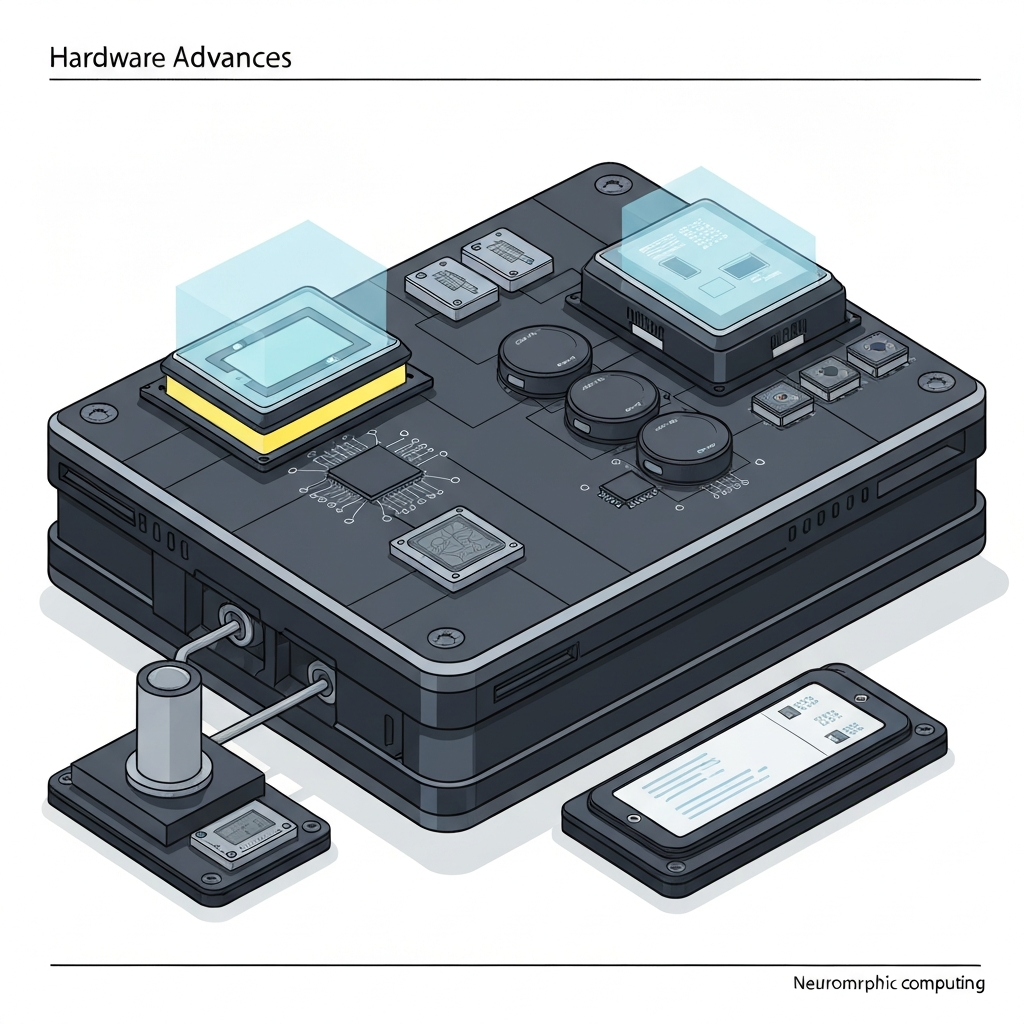
2. Key Advancements in Neuromorphic Chip Design
Recent years have seen significant progress in the development of neuromorphic chips, with various companies and research institutions pushing the boundaries of what's possible. These advancements span a range of areas, including chip architecture, fabrication techniques, and programming models, each contributing to the overall performance and capabilities of neuromorphic systems.
- Advanced Chip Architectures: Researchers are exploring novel chip architectures that optimize for specific tasks, such as sparse coding or deep learning. Some architectures use a hierarchical approach, where different layers of neurons are specialized for different levels of abstraction, while others employ a more distributed approach, where neurons are interconnected in a complex, non-hierarchical network. For instance, Intel's Loihi chip features asynchronous spiking neural networks and programmable neuron models, while IBM's TrueNorth chip uses a more synchronous architecture with a fixed neuron model. The choice of architecture depends on the specific application and the trade-offs between performance, power consumption, and programmability.
- Novel Fabrication Techniques: The fabrication of neuromorphic chips requires precise control over the properties of the individual neurons and synapses. Researchers are exploring new materials and fabrication techniques to improve the density, reliability, and energy efficiency of these devices. For example, some are using memristors based on metal oxides or organic materials, while others are developing three-dimensional integration techniques to increase the density of neurons and synapses on a single chip. These advancements are crucial for scaling up neuromorphic systems to handle more complex problems.
- Efficient Programming Models: Programming neuromorphic chips can be challenging due to their non-traditional architecture and spiking-based operation. Researchers are developing new programming models and software tools to simplify the process of designing and deploying neuromorphic applications. These models often involve abstracting away the low-level details of the hardware and providing a higher-level interface for specifying the desired neural network behavior. For example, some researchers are using spiking neural network simulators to train neural networks off-line and then map them onto neuromorphic hardware for real-time inference.
3. Global Applications and Market Potential
Pro Tip: Focus neuromorphic computing applications on areas where real-time processing of unstructured or sensor data is critical, such as autonomous systems and predictive maintenance.
Neuromorphic computing is poised to disrupt a wide range of industries, from robotics and autonomous vehicles to healthcare and finance. Its ability to process complex, real-world data in real-time makes it well-suited for applications that require low latency, high efficiency, and robustness to noise and variability. Furthermore, the ability to learn and adapt makes it highly advantageous in dynamic environments where traditional programming approaches struggle.
🛒 Amazon Global Deals
Shop Now: Neuromorphic Computing Hardware Advancements* Associate commission may be earned.
In the healthcare sector, neuromorphic systems can be used for medical image analysis, drug discovery, and personalized medicine. For example, they can analyze medical images to detect anomalies or predict the likelihood of disease, or they can be used to simulate the behavior of drugs and identify potential targets. In finance, neuromorphic systems can be used for fraud detection, risk management, and algorithmic trading. They can analyze large datasets to identify patterns and anomalies that are indicative of fraudulent activity, or they can be used to predict market trends and optimize trading strategies.
The market potential for neuromorphic computing is significant. As the technology matures and becomes more readily available, it is expected to drive significant growth in the areas of edge computing, IoT, and AI. The total addressable market for neuromorphic computing is estimated to be in the billions of dollars in the coming years. This growth will be driven by the increasing demand for intelligent and efficient computing solutions in a wide range of industries, as well as the decreasing cost and complexity of neuromorphic hardware and software.
Conclusion
Neuromorphic computing represents a significant leap forward in computing technology, offering a fundamentally different approach to processing information. By mimicking the structure and function of the human brain, neuromorphic systems promise to overcome the limitations of traditional von Neumann architectures and enable a new generation of intelligent and efficient computing solutions. The advancements in chip design, fabrication techniques, and programming models are paving the way for the widespread adoption of neuromorphic computing in various industries.
The future of neuromorphic computing looks bright, with ongoing research and development efforts focused on improving the performance, scalability, and programmability of these systems. As the technology matures, we can expect to see even more innovative applications emerge, transforming the way we interact with technology and solve complex problems. Furthermore, this technology is expected to be a key enabler for the next generation of AI, driving innovations in areas such as robotics, autonomous systems, and cognitive computing.
❓ Frequently Asked Questions (FAQ)
What are the primary advantages of neuromorphic computing over traditional computing?
Neuromorphic computing offers several advantages, most notably in energy efficiency and speed for specific types of tasks. Unlike conventional computers that separate memory and processing, neuromorphic systems integrate these functions, dramatically reducing power consumption, especially for tasks like image recognition and sensor data interpretation. Furthermore, their parallel processing architecture, inspired by the human brain, allows for faster processing of unstructured and noisy data, providing a significant advantage in real-time applications compared to the sequential processing of traditional systems. This makes them highly suitable for applications requiring immediate decision-making based on complex and evolving data streams.
What are some of the current limitations holding back widespread adoption of neuromorphic computing?
Despite its promise, neuromorphic computing faces several hurdles to widespread adoption. One significant limitation is the maturity of the hardware itself, with current systems still under development and not yet as robust or easily manufactured as traditional chips. Programming these systems also presents challenges, as the programming paradigms are different, requiring specialized skills and tools. Additionally, the development of algorithms specifically tailored for neuromorphic architectures is ongoing, and many existing machine learning models need to be adapted or entirely redesigned to fully leverage their capabilities. Finally, the lack of standardization across different neuromorphic platforms makes it difficult to transfer knowledge and applications, hindering broader adoption and collaboration.
In what specific applications do you see neuromorphic computing having the biggest immediate impact?
Neuromorphic computing is particularly well-suited for applications requiring real-time processing of unstructured or sensor data, especially at the edge. This includes areas like autonomous systems (drones, robots, self-driving cars) where quick and efficient data processing is critical for navigation and decision-making. Predictive maintenance is another promising area, where neuromorphic systems can analyze sensor data from machinery to detect anomalies and predict failures before they occur, reducing downtime and costs. Furthermore, applications like real-time video analytics, such as object detection and facial recognition, can benefit significantly from the low-latency and power-efficient capabilities of neuromorphic hardware.
Tags: #NeuromorphicComputing #AIHardware #EdgeComputing #SpikingNeuralNetworks #TechInnovation #GlobalTech #FutureofComputing
🛒 Amazon Global Deals
Shop Now: Neuromorphic Computing Hardware Advancements* Associate commission may be earned.
⚠️ LEGAL DISCLAIMER
For Informational Purposes Only: All content provided by GGG PICK is for general informational purposes only. This content is not intended to serve as a substitute for official professional advice, technical diagnosis, or legal counsel.
Disclaimer of Warranty: While we strive to maintain the currency and accuracy of information, we do not guarantee the completeness, reliability, or real-time accuracy of the provided data. Any decisions and actions taken based on the information from this website are solely at the user's own risk.
Note: Always consult with a certified professional before making significant business or technical decisions. GGG PICK shall not be held liable for any direct or indirect loss or damage resulting from the use of this website.