Small Business CRM Software Comparison Choosing the Right Solution
📖 5 min read
🔥 Quick Link: Check Best Seller Prices
View "Small Business CRM Software Comparison" on Amazon →For small business owners, managing customer relationships efficiently is paramount to success. Customer Relationship Management (CRM) software provides a centralized platform to organize customer data, track interactions, automate sales processes, and ultimately, enhance customer satisfaction. However, with the multitude of CRM options available, choosing the right one can be a daunting task. This comprehensive guide will delve into a comparison of several leading CRM software solutions tailored for small businesses, highlighting their key features, pricing, and suitability for different business needs. We'll explore the factors to consider when selecting a CRM and provide actionable insights to help you make an informed decision that aligns with your business goals and budget. Investing in the right CRM can significantly improve efficiency, boost sales, and foster stronger customer loyalty, giving your small business a competitive edge.
1. Key Features to Consider in Small Business CRM Software
When evaluating CRM software for your small business, several key features should be at the forefront of your decision-making process. These features directly impact your ability to manage customer interactions, streamline sales processes, and improve overall business efficiency. A well-chosen CRM should provide robust contact management, allowing you to store and organize detailed information about your customers and prospects, including contact details, interaction history, and purchase preferences.
Furthermore, sales automation features are essential for streamlining your sales pipeline. This includes lead management, opportunity tracking, and automated email marketing. For example, a good CRM will automatically assign leads to the appropriate sales representative and track the progress of each deal through the sales cycle. Reporting and analytics are also vital for understanding your business performance. Features like customizable dashboards, sales reports, and customer segmentation analytics allow you to identify trends, measure the effectiveness of your marketing campaigns, and make data-driven decisions. The ability to integrate with other business tools, such as email marketing platforms, accounting software, and e-commerce platforms, is also crucial for ensuring a seamless workflow and avoiding data silos.
Finally, consider the user-friendliness and scalability of the CRM. A complicated or difficult-to-use CRM will likely be underutilized by your team. Choose a CRM with an intuitive interface and comprehensive training resources. Scalability is also important as your business grows. Ensure that the CRM can accommodate your increasing data volume and user base without significant performance degradation. This will prevent the need for costly and disruptive migrations in the future, allowing you to focus on growing your business.
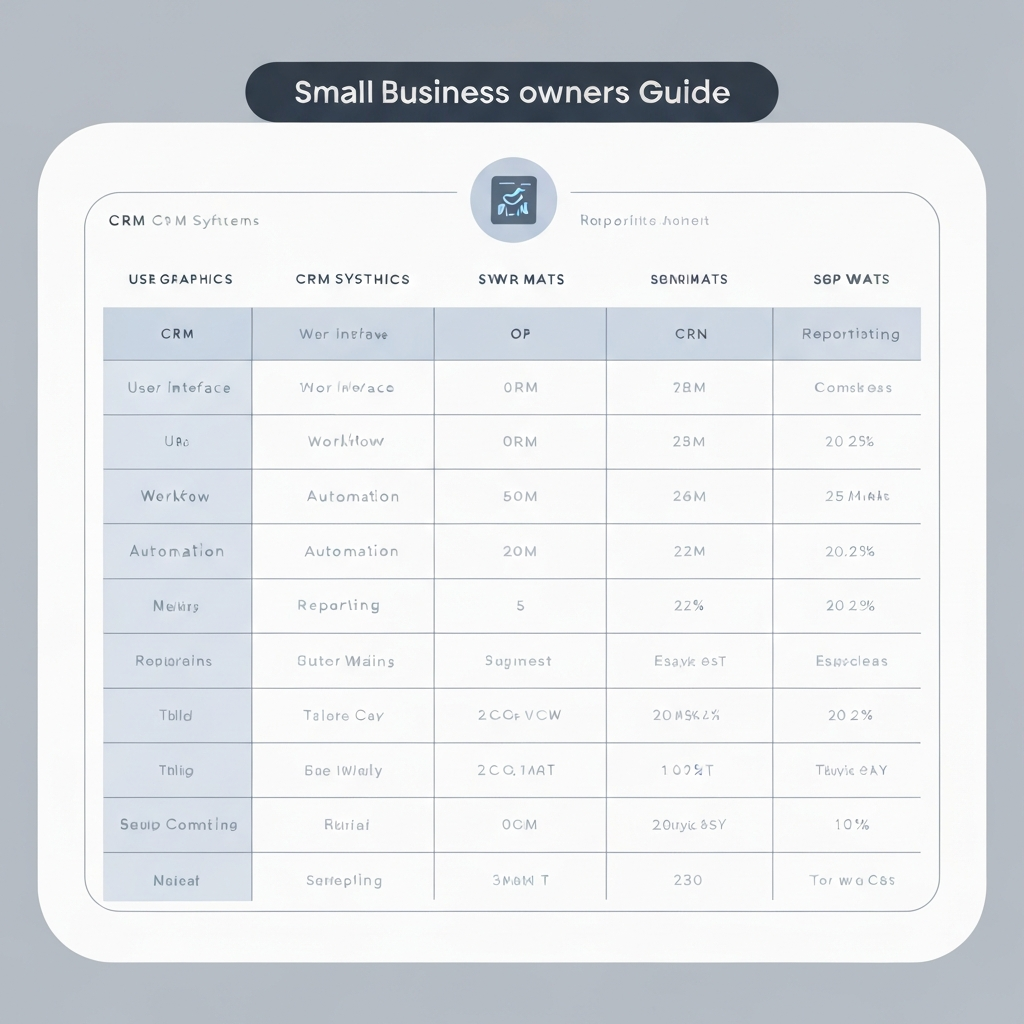
2. CRM Software Comparison: Top Choices for Small Businesses
Navigating the CRM software landscape can be overwhelming, so let's compare some of the top contenders for small businesses. Each platform offers unique strengths and caters to different needs, so it's important to evaluate them based on your specific requirements.
- HubSpot CRM: HubSpot CRM is a popular choice, offering a free version with a robust set of features suitable for many small businesses. It excels in lead management, contact tracking, and sales automation. While the free version has limitations, it provides a great starting point. The paid versions offer more advanced features like marketing automation and custom reporting, but can become expensive as your business grows.
- Zoho CRM: Zoho CRM is known for its affordability and extensive features. It offers a wide range of plans, including a free plan for up to three users, making it an accessible option for very small businesses. Zoho CRM boasts excellent integration capabilities with other Zoho products, as well as third-party applications. It offers advanced features like AI-powered sales assistant, lead scoring, and customizable workflows, allowing businesses to automate various aspects of their sales and marketing processes.
- Salesforce Sales Cloud Essentials: Salesforce is a market leader in CRM, and their Sales Cloud Essentials plan is designed specifically for small businesses. While it's a more expensive option than HubSpot or Zoho, it offers powerful features and scalability. Sales Cloud Essentials includes contact management, opportunity tracking, and sales forecasting, as well as robust reporting and analytics. It also offers integration with other Salesforce products and a vast ecosystem of third-party apps, providing businesses with a comprehensive solution that can grow with them.
3. Implementing and Maximizing Your CRM Investment
Pro Tip: Focus on data hygiene from day one. Regularly clean and update your CRM data to ensure accuracy and prevent issues down the line.
Implementing a CRM is more than just installing software; it requires a strategic approach to ensure successful adoption and maximize your return on investment. Start by clearly defining your business goals and identifying the key challenges that a CRM can help solve. This will guide your selection process and ensure that you choose a CRM that aligns with your specific needs.
🛒 Amazon Global Deals
Shop Now: Small Business CRM Software Comparison* Associate commission may be earned.
Once you've selected a CRM, develop a comprehensive implementation plan. This should include data migration, user training, and process customization. Data migration can be a complex process, so ensure that you have a clear strategy for transferring your existing customer data into the new CRM. User training is crucial for ensuring that your team understands how to use the CRM effectively. Provide comprehensive training resources and ongoing support to encourage adoption and maximize utilization. Also, customize the CRM to align with your existing business processes and workflows. This may involve creating custom fields, configuring automation rules, and setting up dashboards to track key performance indicators (KPIs).
Finally, continuously monitor and optimize your CRM usage. Track key metrics such as user adoption, data quality, and sales performance to identify areas for improvement. Regularly review your CRM configuration and make adjustments as needed to ensure that it continues to meet your evolving business needs. Solicit feedback from your team and incorporate their suggestions to improve the user experience. By continuously optimizing your CRM usage, you can ensure that it remains a valuable asset for your business, driving efficiency, improving customer relationships, and boosting sales growth.
Conclusion
Choosing the right CRM software is a critical decision for small businesses looking to enhance customer relationships, streamline operations, and drive sales growth. By carefully evaluating your business needs, comparing the key features of different CRM solutions, and developing a comprehensive implementation plan, you can select a CRM that aligns with your goals and budget. A well-implemented CRM can provide a centralized platform for managing customer data, automating sales processes, and tracking performance, giving your small business a competitive edge.
The CRM landscape is constantly evolving, with new features and technologies emerging regularly. Looking ahead, we can expect to see increased use of AI and machine learning in CRM, enabling businesses to automate more tasks, personalize customer interactions, and gain deeper insights from their data. Businesses should stay informed about these trends and proactively adapt their CRM strategies to remain competitive and deliver exceptional customer experiences.
❓ Frequently Asked Questions (FAQ)
What are the essential features to look for in a CRM for a small business?
Essential features include contact management to organize customer data, sales automation to streamline sales processes, and reporting and analytics to track performance. Integration with other tools like email marketing platforms is also crucial. Furthermore, consider features like lead management and opportunity tracking, which can significantly improve sales efficiency and forecasting accuracy. A user-friendly interface and scalable architecture are equally important to ensure long-term usability and adaptability as your business grows.
How much should a small business expect to spend on CRM software?
The cost of CRM software for a small business can vary widely depending on the features, number of users, and vendor. Some CRM systems offer free versions with limited functionality, while others charge a monthly subscription fee per user. A small business might spend anywhere from $0 to $100+ per user per month. Consider a CRM’s total cost of ownership, which includes not only the subscription fees but also implementation costs, training expenses, and ongoing support fees. Carefully evaluate your budget and select a CRM that offers the best value for your needs.
What are the common challenges faced during CRM implementation, and how can they be overcome?
Common challenges during CRM implementation include data migration issues, user resistance, and lack of clear business processes. Data migration can be tricky if your existing data is scattered across different systems. To overcome this, plan your data migration carefully and cleanse your data before importing it into the new CRM. User resistance can be addressed by providing comprehensive training and highlighting the benefits of using the CRM. Define clear business processes and workflows before implementing the CRM to ensure that it aligns with your operational needs. Having a dedicated CRM administrator can help to address issues and ensure that the CRM is used effectively.
Tags: #SmallBusiness #CRM #SoftwareComparison #CustomerRelationshipManagement #TechTips #BusinessGrowth #SalesAutomation
🛒 Amazon Global Deals
Shop Now: Small Business CRM Software Comparison* Associate commission may be earned.
⚠️ LEGAL DISCLAIMER
For Informational Purposes Only: All content provided by GGG PICK is for general informational purposes only. This content is not intended to serve as a substitute for official professional advice, technical diagnosis, or legal counsel.
Disclaimer of Warranty: While we strive to maintain the currency and accuracy of information, we do not guarantee the completeness, reliability, or real-time accuracy of the provided data. Any decisions and actions taken based on the information from this website are solely at the user's own risk.
Note: Always consult with a certified professional before making significant business or technical decisions. GGG PICK shall not be held liable for any direct or indirect loss or damage resulting from the use of this website.