Space Debris Mitigation Strategies Protecting Our Orbital Future
📖 5 min read
🔥 Quick Link: Check Best Seller Prices
View "Space Debris Mitigation Strategies" on Amazon →The vast expanse of space, once perceived as an infinite frontier, is now facing a growing environmental crisis- space debris. This accumulation of defunct satellites, rocket fragments, and other man-made objects orbiting Earth poses a significant and increasing threat to operational satellites, the International Space Station, and future space missions. The sheer velocity of these objects, traveling at thousands of miles per hour, means that even small pieces of debris can cause catastrophic damage upon impact. Addressing this issue is paramount to ensuring the long-term sustainability of space activities and protecting critical infrastructure in orbit. Without effective mitigation strategies, the risk of collisions will continue to escalate, potentially leading to a cascading effect known as the Kessler Syndrome, where the creation of new debris outpaces natural decay, rendering certain orbital regions unusable.
1. Understanding the Space Debris Problem
Space debris, also known as orbital debris or space junk, encompasses all non-functional, human-made objects in orbit around Earth. This includes defunct satellites, discarded rocket stages, fragments from explosions and collisions, and even small items like tools dropped by astronauts during spacewalks. The problem is exacerbated by the fact that these objects orbit at very high speeds, typically several kilometers per second. At these velocities, even a tiny fleck of paint can cause significant damage to a spacecraft or satellite.
The severity of the space debris problem stems from the exponential growth of objects in orbit. Each collision creates more debris, which in turn increases the likelihood of further collisions. This cascading effect, known as the Kessler Syndrome, was theorized by NASA scientist Donald Kessler in 1978 and describes a scenario where the density of objects in low Earth orbit (LEO) becomes so high that a runaway chain reaction of collisions would make space activities extremely hazardous, if not impossible. Understanding the mechanics and potential consequences of the Kessler Syndrome is crucial for informing effective mitigation strategies.
The implications of uncontrolled space debris extend far beyond the immediate threat to satellites. Satellites play a vital role in numerous aspects of modern life, including communication, navigation (GPS), weather forecasting, Earth observation, and national security. Disruption of these services due to debris collisions would have far-reaching consequences for the global economy, scientific research, and everyday life. Therefore, proactive measures to mitigate space debris are not merely a matter of protecting assets in space, but of safeguarding critical infrastructure and ensuring the continued benefits that space technologies provide to society.
2. Key Mitigation Strategies
Mitigating the space debris problem requires a multi-faceted approach encompassing preventive measures, remediation techniques, and international collaboration. These strategies aim to reduce the creation of new debris, remove existing debris from orbit, and foster responsible behavior among space actors. The success of these efforts depends on the development and implementation of innovative technologies, the establishment of effective regulatory frameworks, and a global commitment to sustainable space activities.
- Prevention through Design and Operations: One of the most effective ways to mitigate space debris is to prevent its creation in the first place. This can be achieved through careful design of satellites and launch vehicles to minimize the release of debris during normal operations. For example, rocket stages can be designed to re-enter the atmosphere and burn up completely, rather than remaining in orbit as debris. Similarly, satellites can be equipped with propulsion systems that allow them to de-orbit at the end of their mission, ensuring their controlled re-entry and disposal. Operational procedures can also be optimized to reduce the risk of collisions, such as implementing collision avoidance maneuvers based on accurate tracking of debris objects.
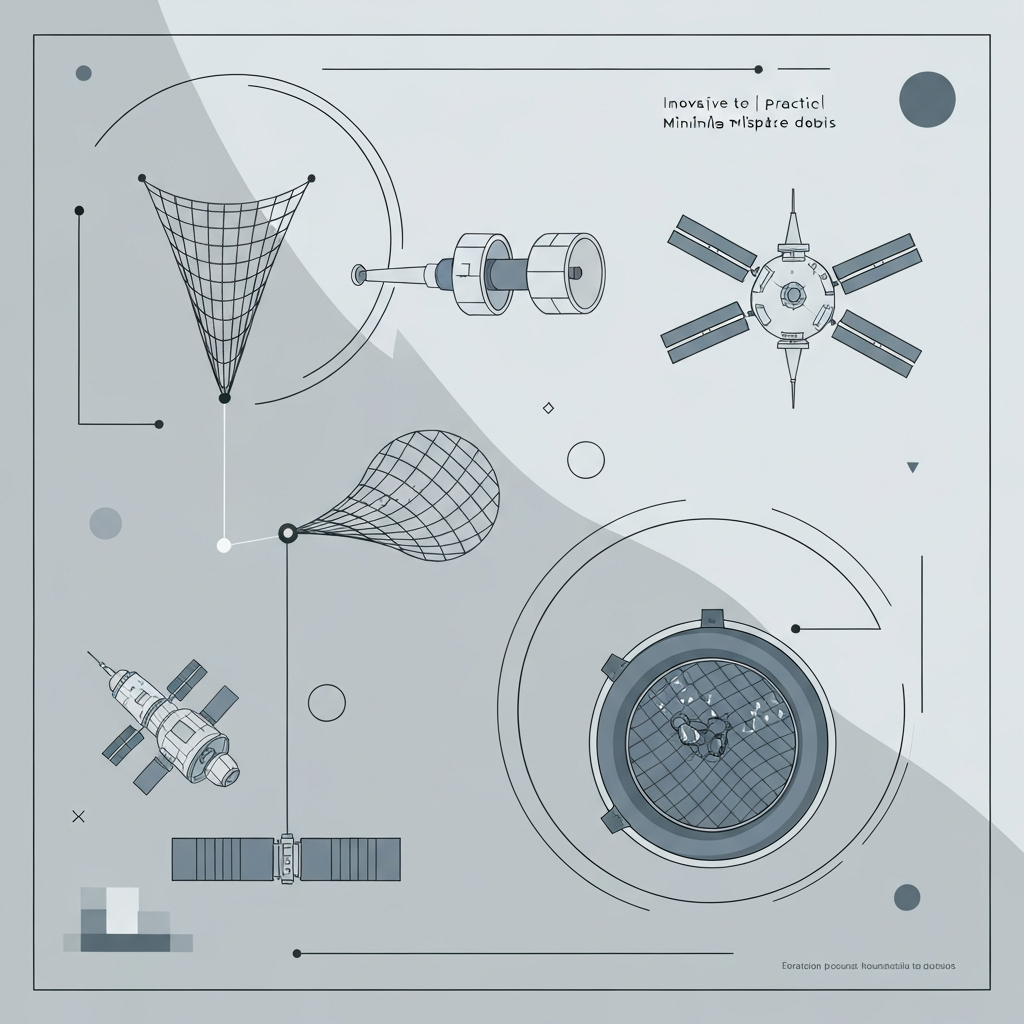
- Active Debris Removal (ADR): Active Debris Removal involves the development and deployment of technologies to capture and remove existing debris objects from orbit. Several ADR concepts are being explored, including robotic arms to grapple debris, nets to capture multiple objects, and harpoons to penetrate and secure debris. Once captured, the debris can be de-orbited, either by causing it to burn up in the atmosphere or by moving it to a graveyard orbit where it poses less of a threat. ADR is a challenging and expensive undertaking, but it is considered essential for addressing the most hazardous debris objects that pose the greatest risk of collisions.
- International Regulations and Guidelines: The long-term sustainability of space activities requires a robust international regulatory framework governing the behavior of space actors. The United Nations Committee on the Peaceful Uses of Outer Space (COPUOS) has developed a set of guidelines for mitigating space debris, which include recommendations for minimizing debris generation, promoting responsible disposal of spacecraft, and sharing information on debris tracking and collision avoidance. While these guidelines are not legally binding, they provide a valuable framework for national regulations and international cooperation. Further efforts are needed to strengthen international agreements and develop enforceable standards to ensure compliance with debris mitigation measures.
3. Technological Innovations in Debris Mitigation
Investing in advanced tracking technologies is paramount. Improving the accuracy and comprehensiveness of debris tracking systems is essential for effective collision avoidance and the planning of active debris removal missions.
Advancements in technology are crucial for developing effective and efficient space debris mitigation strategies. These innovations span across various areas, including debris tracking, collision avoidance, active debris removal, and sustainable spacecraft design. Continued investment in research and development is essential to address the challenges posed by space debris and ensure the long-term viability of space activities.
🛒 Amazon Global Deals
Shop Now: Space Debris Mitigation Strategies* Associate commission may be earned.
One key area of innovation is in debris tracking technologies. Ground-based radar and optical telescopes are used to track debris objects in orbit, but their capabilities are limited by weather conditions and the size of the objects they can detect. New technologies, such as space-based sensors and advanced radar systems, are being developed to improve the accuracy and comprehensiveness of debris tracking. These systems can provide more precise information on the location, trajectory, and characteristics of debris objects, enabling more effective collision avoidance maneuvers.
Active debris removal (ADR) technologies are also rapidly evolving. Various methods are being explored, including robotic capture, nets, harpoons, and even lasers. Each approach has its own advantages and disadvantages in terms of cost, complexity, and effectiveness. For example, robotic capture is a precise but complex method, while nets can capture multiple objects but may pose a risk of creating more debris. Lasers can be used to gently nudge debris objects into lower orbits, but they require significant power and precise targeting. The optimal ADR technology will likely depend on the specific characteristics of the debris object and the operational environment.
Conclusion
The problem of space debris is a complex and growing challenge that requires a concerted global effort. The long-term sustainability of space activities depends on the effective implementation of mitigation strategies, including preventive measures, active debris removal, and international regulations. By investing in innovative technologies, fostering responsible behavior, and promoting international cooperation, we can protect our orbital environment and ensure that space remains accessible for future generations.
Looking ahead, the development of more advanced debris tracking systems, the deployment of effective active debris removal technologies, and the establishment of robust international regulations will be crucial for mitigating the space debris problem. As space activities continue to expand, it is essential that we prioritize the sustainable use of space and take proactive measures to address the challenges posed by space debris. Failure to do so could have serious consequences for our ability to utilize space for the benefit of humanity.
❓ Frequently Asked Questions (FAQ)
What is the Kessler Syndrome, and why is it a concern?
The Kessler Syndrome, proposed by NASA scientist Donald Kessler, describes a scenario in which the density of objects in low Earth orbit (LEO) becomes so high that collisions between objects create more debris than is naturally removed. This cascading effect leads to an exponential increase in space debris, making space activities increasingly hazardous. The concern is that it could eventually render certain orbital regions unusable, impacting satellite operations, space exploration, and various services that rely on space-based infrastructure.
What are some examples of active debris removal (ADR) technologies currently being developed?
Several ADR technologies are under development, each with unique approaches. Robotic arms are designed to grapple and capture debris, while nets can capture multiple smaller objects simultaneously. Harpoons offer a method to penetrate and secure debris for removal. Additionally, some concepts involve using lasers to ablate the surface of debris, causing it to gradually de-orbit. The optimal approach depends on the size, shape, and orbital characteristics of the target debris, as well as cost and feasibility considerations.
How do international regulations contribute to space debris mitigation?
International regulations, primarily through the United Nations Committee on the Peaceful Uses of Outer Space (COPUOS), provide guidelines and recommendations for mitigating space debris. These guidelines promote responsible behavior among space actors, including minimizing debris generation during satellite deployment and operation, ensuring the proper disposal of spacecraft at the end of their mission, and sharing information on debris tracking. While not legally binding, these guidelines serve as a framework for national regulations and international cooperation, fostering a more sustainable approach to space activities. Stronger, enforceable international standards are still needed to ensure compliance and address the growing threat of space debris effectively.
Tags: #SpaceDebris #OrbitalDebris #SpaceSustainability #ActiveDebrisRemoval #KesslerSyndrome #SpaceTech #SpaceRegulations
🛒 Amazon Global Deals
Shop Now: Space Debris Mitigation Strategies* Associate commission may be earned.
⚠️ LEGAL DISCLAIMER
For Informational Purposes Only: All content provided by GGG PICK is for general informational purposes only. This content is not intended to serve as a substitute for official professional advice, technical diagnosis, or legal counsel.
Disclaimer of Warranty: While we strive to maintain the currency and accuracy of information, we do not guarantee the completeness, reliability, or real-time accuracy of the provided data. Any decisions and actions taken based on the information from this website are solely at the user's own risk.
Note: Always consult with a certified professional before making significant business or technical decisions. GGG PICK shall not be held liable for any direct or indirect loss or damage resulting from the use of this website.