Arctic Data Center Cooling Strategies Innovation in Extreme Climates
📖 5 min read
🔥 Quick Link: Check Best Seller Prices
View "Arctic Data Center Cooling Strategies" on Amazon →In an era defined by exponential data growth, the demand for robust and reliable data centers has surged dramatically. However, powering and cooling these facilities present significant challenges, especially in regions with extreme climates. Arctic data centers, strategically located to leverage the region’s natural cold environment, offer a compelling solution to these challenges. This article delves into the innovative cooling strategies employed in these unique facilities, exploring their effectiveness, sustainability, and potential impact on the future of data storage and processing. By harnessing the Arctic's inherent cooling capabilities, these data centers are not only minimizing their environmental footprint but also paving the way for more energy-efficient and cost-effective global IT infrastructure. Understanding the nuances of these strategies is crucial for anyone involved in IT infrastructure, sustainability, and the future of global technology.
1. Harnessing Nature-Free Cooling Techniques
Arctic data centers are uniquely positioned to capitalize on the region's naturally cold environment, employing free cooling techniques to significantly reduce energy consumption. Free cooling involves utilizing the ambient air or water to cool the data center equipment, minimizing or even eliminating the need for traditional mechanical cooling systems. This approach is particularly effective in the Arctic, where temperatures remain consistently low throughout the year, providing a readily available and sustainable cooling source. The lower the ambient temperature, the more efficiently the data center can operate, leading to substantial cost savings and a reduced carbon footprint.
One of the most prevalent free cooling methods is direct air cooling, where outside air is filtered and circulated through the data center to dissipate heat. Advanced filtration systems are crucial in this setup to remove pollutants and particulate matter, ensuring the integrity of the sensitive electronic equipment. Another effective technique is indirect air cooling, which uses a heat exchanger to transfer heat from the data center’s internal air to the cooler outside air, preventing direct contact and further safeguarding the equipment. Some data centers even utilize seawater or glacial meltwater for cooling, employing sophisticated filtration and treatment processes to maintain water purity and prevent corrosion.
The implementation of free cooling strategies in Arctic data centers has profound implications for energy efficiency and sustainability. By reducing reliance on energy-intensive mechanical cooling systems, these facilities can achieve significant reductions in electricity consumption, leading to lower operating costs and a smaller environmental impact. This approach not only benefits the data center operators but also contributes to a more sustainable global IT infrastructure by reducing carbon emissions and promoting the use of renewable energy sources. As the demand for data continues to grow, the adoption of free cooling techniques in Arctic and other cold-climate data centers will become increasingly critical to ensuring the long-term sustainability of the digital economy.
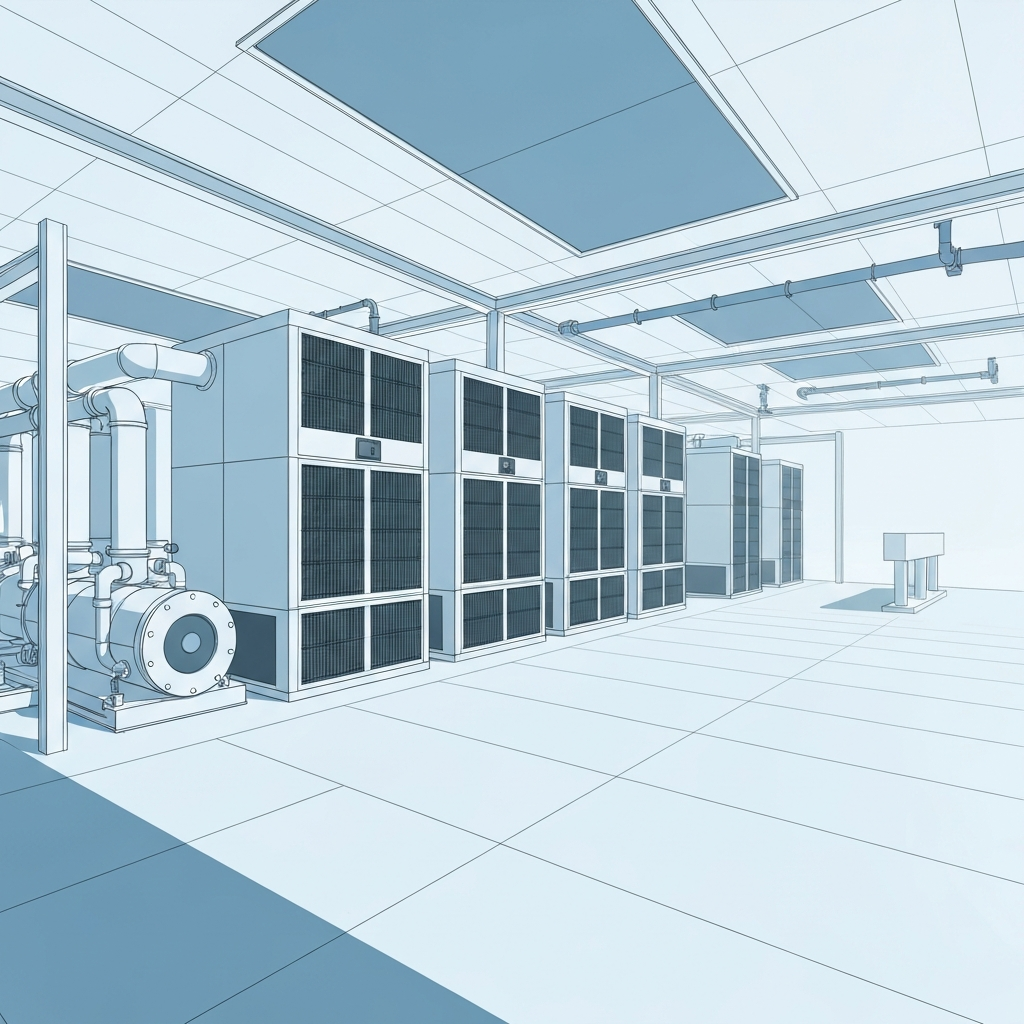
2. Advanced Liquid Cooling Systems
While free cooling techniques offer a viable solution for many Arctic data centers, some facilities require more sophisticated cooling systems to manage high-density computing environments. Advanced liquid cooling systems are emerging as a promising alternative, offering superior heat dissipation capabilities compared to traditional air-based cooling methods. These systems involve circulating a liquid coolant, such as water or a specialized dielectric fluid, directly to the heat-generating components within the servers, providing highly efficient and targeted cooling.
- Direct-to-Chip Cooling: This method involves placing a cold plate directly on top of the CPU or GPU, allowing for the coolant to absorb heat directly from the source. Direct-to-chip cooling offers exceptional thermal performance, enabling higher server densities and improved overall efficiency. The coolant circulates through a closed-loop system, transferring heat to a heat exchanger where it is dissipated.
- Immersion Cooling: Immersion cooling takes liquid cooling to the next level by submerging entire servers in a dielectric fluid. This approach provides uniform cooling across all components, eliminating hotspots and enabling even higher server densities. The heat is then transferred to a heat exchanger, where it can be rejected to the ambient environment or even repurposed for other uses, such as heating buildings.
- Hybrid Systems: Hybrid cooling systems combine the benefits of both air and liquid cooling, using liquid cooling for high-density components and air cooling for the remaining equipment. This approach offers a balanced solution that maximizes efficiency while minimizing complexity and cost. Hybrid systems can be tailored to the specific needs of each data center, providing a flexible and adaptable cooling solution.
3. Innovative Heat Reuse and Energy Recovery
Pro Tip: Implement a comprehensive heat reuse strategy to not only reduce energy consumption but also contribute to the local community by providing a sustainable heat source for buildings and infrastructure.
Beyond simply dissipating heat, innovative Arctic data centers are exploring ways to reuse and recover the waste heat generated by their operations. This approach not only further reduces energy consumption but also transforms a potential environmental liability into a valuable resource. By capturing and repurposing the heat, data centers can contribute to a more circular and sustainable energy economy.
🛒 Amazon Global Deals
Shop Now: Arctic Data Center Cooling Strategies* Associate commission may be earned.
One common method of heat reuse is to integrate the data center’s cooling system with local district heating networks. The waste heat from the data center can be used to heat nearby buildings, providing a cost-effective and environmentally friendly alternative to traditional heating methods. In some cases, the heat can also be used for industrial processes, such as aquaculture or greenhouse farming, further diversifying the benefits of heat reuse. The implementation of such systems requires careful planning and coordination with local stakeholders, but the potential rewards are significant.
Another innovative approach is to convert the waste heat into electricity using thermoelectric generators (TEGs). TEGs can directly convert heat into electrical energy, providing a supplementary power source for the data center or the local grid. While the efficiency of TEGs is currently limited, ongoing research and development are focused on improving their performance and reducing their cost. As the technology matures, TEGs could become a more viable option for recovering waste heat from data centers and other industrial facilities, further enhancing their sustainability.
Conclusion
Arctic data centers are at the forefront of innovation in sustainable IT infrastructure, leveraging the region’s unique environmental conditions and pioneering advanced cooling strategies. By harnessing free cooling techniques, implementing liquid cooling systems, and exploring heat reuse opportunities, these facilities are minimizing their environmental footprint and paving the way for a more energy-efficient future for the digital economy. The lessons learned from these Arctic deployments can be applied to data centers in other regions, contributing to a broader shift towards sustainable and responsible IT practices.
As the demand for data continues to grow, the importance of sustainable data center operations will only increase. Arctic data centers offer a compelling example of how innovation and environmental consciousness can be combined to create a more sustainable and resilient IT infrastructure. By embracing these strategies, the industry can ensure that the digital revolution does not come at the expense of the planet.
❓ Frequently Asked Questions (FAQ)
What are the primary benefits of locating a data center in the Arctic?
Locating a data center in the Arctic offers several compelling advantages, primarily related to cooling costs and environmental impact. The naturally cold climate allows for the use of free cooling techniques, which drastically reduce the energy required for cooling compared to traditional data centers in warmer regions. This leads to significant cost savings and a smaller carbon footprint, aligning with sustainability goals. Additionally, the political stability and robust infrastructure of some Arctic regions make them attractive locations for data storage.
How do Arctic data centers address the challenges of extreme cold and potential environmental impact?
Arctic data centers mitigate the challenges of extreme cold through careful design and operational strategies. For instance, waste heat is often repurposed to maintain optimal operating temperatures within the facility, preventing components from becoming too cold. Environmental impact is addressed through the use of renewable energy sources, such as hydroelectric and wind power, and by implementing stringent waste management and pollution control measures. Continuous monitoring and adherence to environmental regulations are also crucial for minimizing the facility's ecological footprint. These data centers prioritize eco-friendly operation to protect the sensitive Arctic environment.
What role does liquid cooling play in Arctic data center operations, and what are its advantages?
Liquid cooling plays an increasingly significant role in Arctic data center operations, particularly for high-density computing environments. Unlike air cooling, liquid cooling, such as direct-to-chip or immersion cooling, offers superior heat dissipation capabilities, allowing for higher server densities and improved energy efficiency. This is especially beneficial in the Arctic, where maximizing efficiency is paramount for minimizing environmental impact and operational costs. Furthermore, liquid cooling can reduce noise levels and improve the reliability of equipment, contributing to a more sustainable and resilient data center infrastructure. Liquid cooling represents a critical advancement for efficient Arctic data center operations.
Tags: #ArcticDataCenters #DataCenterCooling #SustainableIT #GreenTech #EnergyEfficiency #ITInfrastructure #DataStorage
🛒 Amazon Global Deals
Shop Now: Arctic Data Center Cooling Strategies* Associate commission may be earned.
⚠️ LEGAL DISCLAIMER
For Informational Purposes Only: All content provided by GGG PICK is for general informational purposes only. This content is not intended to serve as a substitute for official professional advice, technical diagnosis, or legal counsel.
Disclaimer of Warranty: While we strive to maintain the currency and accuracy of information, we do not guarantee the completeness, reliability, or real-time accuracy of the provided data. Any decisions and actions taken based on the information from this website are solely at the user's own risk.
Note: Always consult with a certified professional before making significant business or technical decisions. GGG PICK shall not be held liable for any direct or indirect loss or damage resulting from the use of this website.