Data Localization Trends and Geopolitics
📖 5 min read
🔥 Quick Link: Check Best Seller Prices
View "Data Localization Trends Geopolitics" on Amazon →In today's interconnected world, data flows seamlessly across borders, fueling economic growth, innovation, and global communication. However, this free flow of information is increasingly being challenged by a growing trend known as data localization. Data localization mandates require companies to store and process data within the borders of a specific country, a shift driven by complex factors including national security concerns, data privacy regulations, and the desire for greater sovereignty over digital assets. This trend has profound geopolitical implications, impacting international trade, digital governance, and the very fabric of the global internet. Understanding the drivers and consequences of data localization is crucial for businesses navigating the evolving digital landscape and for policymakers shaping the future of global data flows.
1. Understanding Data Localization
Data localization refers to the practice of requiring data about a country's citizens or generated within its borders to be stored and processed within that country. This contrasts with the traditional model of cross-border data flows, where data is stored and processed in various locations around the world, often in countries with more favorable data protection laws or lower operating costs. The implementation of data localization policies can take various forms, ranging from strict requirements to store all data locally to more nuanced approaches that mandate local storage only for specific types of data, such as personal information or financial records.
Several factors drive the push for data localization. Governments often cite national security concerns, arguing that storing data locally allows them to better monitor and protect against cyber threats and espionage. Data privacy is another key driver, with many countries seeking to ensure that their citizens' data is subject to domestic privacy laws and regulations, offering greater control and recourse in case of data breaches or misuse. For example, the European Union's General Data Protection Regulation (GDPR), while not strictly a data localization law, has significantly influenced the global data privacy landscape, prompting other countries to adopt similar regulations and consider localization measures.
The practical implications of data localization are significant. For businesses, it can mean increased costs, as they may need to establish new data centers or infrastructure in multiple countries to comply with local regulations. It can also lead to fragmentation of the global internet, hindering innovation and cross-border collaboration. Companies like Amazon, Google, and Microsoft, which operate globally, face considerable challenges in adapting their infrastructure and services to comply with varying data localization requirements around the world. The costs associated with maintaining data centers in multiple regions and adhering to diverse regulatory frameworks can be substantial, especially for smaller companies with limited resources.
2. Geopolitical Implications of Data Localization
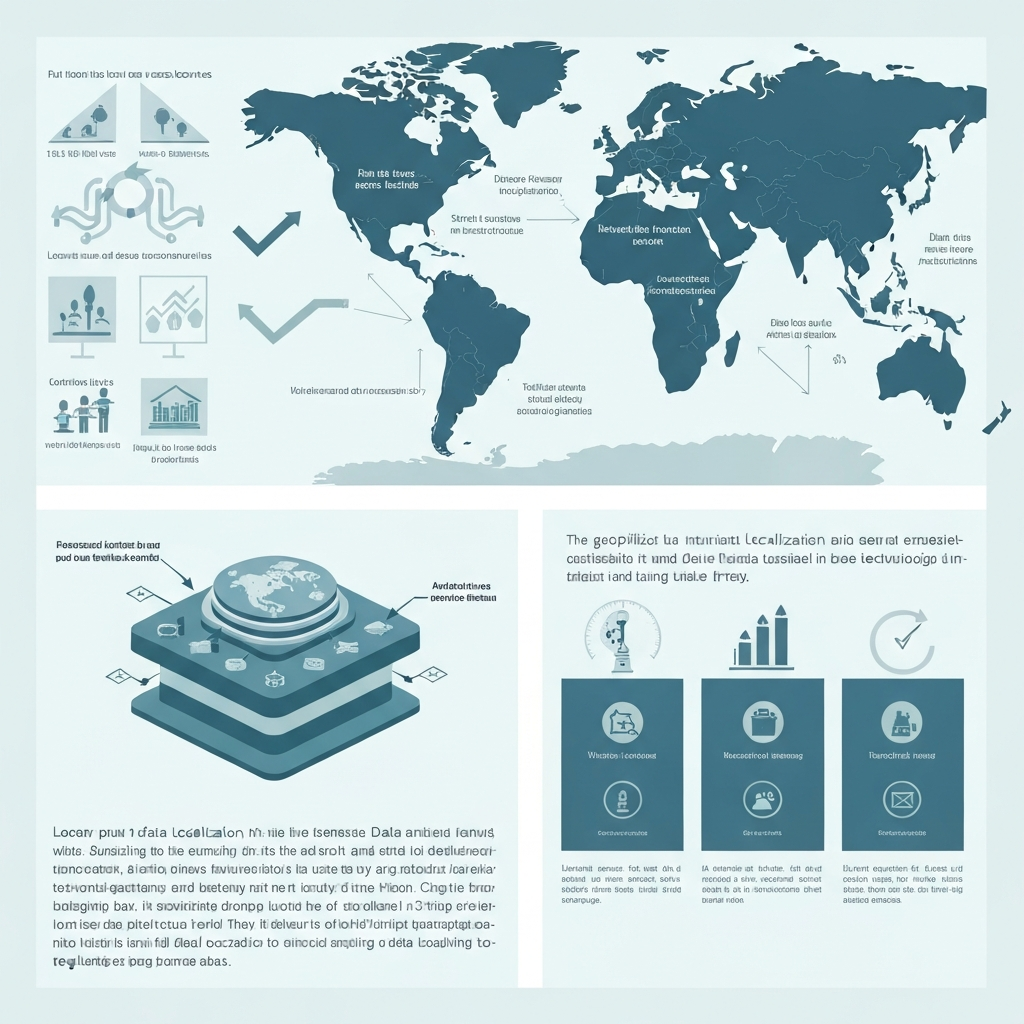
Data localization is not simply a technical issue; it is deeply intertwined with geopolitics and international relations. As countries assert greater control over data within their borders, it impacts trade, security, and the balance of power in the digital realm. The trend reflects a broader global movement toward digital sovereignty, where nations seek to protect their digital interests and assert their influence in cyberspace.
- Digital Sovereignty and National Security: Data localization is often framed as a matter of national security, with governments arguing that local storage and control of data are essential for protecting critical infrastructure and preventing espionage. Countries like China and Russia have implemented strict data localization laws, citing national security concerns as a primary justification. These policies allow governments to monitor data flows, censor information, and potentially gain access to sensitive data held by foreign companies operating within their borders. This approach can create tensions with other nations that view such measures as protectionist and infringing on the free flow of information.
- Trade and Economic Impacts: Data localization can create barriers to international trade and investment. Requiring companies to store data locally increases costs and complexity, making it more difficult for them to operate in certain markets. This can disproportionately affect smaller businesses and startups that lack the resources to establish data centers in multiple countries. The resulting trade barriers can hinder economic growth and reduce the competitiveness of domestic industries that rely on cross-border data flows. The United States, for example, has consistently opposed data localization measures, arguing that they restrict trade and innovation.
- Data Privacy and Regulatory Divergence: While data localization is often presented as a way to enhance data privacy, it can also lead to a fragmented regulatory landscape. Different countries have different data protection laws and enforcement mechanisms, which can create compliance challenges for businesses operating globally. For example, the GDPR in Europe sets a high standard for data protection, while other countries may have weaker regulations or prioritize national security interests over individual privacy rights. This divergence can make it difficult for companies to develop consistent data governance policies and can lead to conflicts of law.
3. Navigating the Data Localization Landscape
Pro Tip: Adopt a flexible and adaptable data governance framework. Prioritize data minimization, pseudonymization, and encryption to mitigate risks associated with data localization requirements. Stay informed about evolving regulations and engage with policymakers to advocate for balanced approaches that promote both data protection and cross-border data flows.
Navigating the complex landscape of data localization requires a strategic and proactive approach. Businesses must understand the specific requirements of each country in which they operate and develop strategies to comply with local regulations while minimizing the impact on their global operations. This often involves a combination of technical solutions, legal expertise, and engagement with policymakers.
🛒 Amazon Global Deals
Shop Now: Data Localization Trends Geopolitics* Associate commission may be earned.
One key strategy is to adopt a flexible and adaptable data governance framework. This includes implementing data minimization techniques to reduce the amount of data that needs to be stored and processed locally, as well as using pseudonymization and encryption to protect sensitive data from unauthorized access. Investing in robust cybersecurity measures is also essential to prevent data breaches and maintain customer trust. Companies should also carefully evaluate their cloud service providers to ensure that they can comply with data localization requirements and provide adequate data protection.
Ultimately, navigating the data localization landscape requires a balanced approach that considers both the legal and technical aspects of data governance. By staying informed about evolving regulations, engaging with policymakers, and investing in appropriate technologies, businesses can minimize the risks associated with data localization and continue to operate effectively in the global digital economy. This proactive approach not only ensures compliance but also demonstrates a commitment to data protection and responsible data management, which can enhance brand reputation and build customer trust.
Conclusion
Data localization is a multifaceted trend with significant implications for businesses, governments, and individuals alike. As countries increasingly assert control over data within their borders, it is crucial to understand the drivers and consequences of this trend and to develop strategies for navigating the evolving digital landscape. The rise of data localization reflects a broader global movement toward digital sovereignty and the desire for greater control over data governance.
Looking ahead, the future of data localization is likely to be shaped by ongoing debates about national security, data privacy, and international trade. As technology continues to evolve and new digital technologies emerge, the challenges of data governance will only become more complex. Therefore, businesses and policymakers must work together to find balanced approaches that promote both data protection and the free flow of information, fostering innovation and economic growth in the digital age.
❓ Frequently Asked Questions (FAQ)
What are the key arguments in favor of data localization?
The primary arguments in favor of data localization center around national security and data privacy. Proponents argue that storing data locally allows governments to better protect against cyber threats, prevent espionage, and ensure that citizens' data is subject to domestic privacy laws. This provides greater control over data governance and allows for more effective enforcement of regulations in case of data breaches or misuse. Furthermore, some argue that data localization can foster local innovation and economic development by creating demand for domestic data storage and processing services.
How does data localization affect cloud computing services?
Data localization significantly impacts cloud computing services by requiring cloud providers to establish data centers within specific countries or regions. This increases the cost and complexity of providing cloud services, as providers must comply with varying data storage and processing requirements in different jurisdictions. It can also limit the scalability and flexibility of cloud services, as data may not be able to be easily transferred across borders. This can lead to a fragmented cloud market, where providers need to offer localized versions of their services to comply with local regulations.
What are some examples of countries with strict data localization laws?
Several countries have implemented strict data localization laws, including China, Russia, and Indonesia. China's Cybersecurity Law, for example, requires companies to store certain types of data, such as personal information and important data related to critical infrastructure, within the country. Similarly, Russia's Yarovaya Law mandates that personal data of Russian citizens be stored and processed within Russia. Indonesia also has data localization requirements for electronic system operators providing public services. These laws reflect a trend toward greater government control over data and a desire to protect national security and data privacy.
Tags: #DataLocalization #Geopolitics #DataPrivacy #DigitalSovereignty #Cybersecurity #GlobalTech #TechTrends
🛒 Amazon Global Deals
Shop Now: Data Localization Trends Geopolitics* Associate commission may be earned.
⚠️ LEGAL DISCLAIMER
For Informational Purposes Only: All content provided by GGG PICK is for general informational purposes only. This content is not intended to serve as a substitute for official professional advice, technical diagnosis, or legal counsel.
Disclaimer of Warranty: While we strive to maintain the currency and accuracy of information, we do not guarantee the completeness, reliability, or real-time accuracy of the provided data. Any decisions and actions taken based on the information from this website are solely at the user's own risk.
Note: Always consult with a certified professional before making significant business or technical decisions. GGG PICK shall not be held liable for any direct or indirect loss or damage resulting from the use of this website.